HealthTech Integrates 2026 — Industry Intelligence Report

Key Takeaways:
- We don’t have an innovation challenge; we have an adoption challenge. The UK’s science, engineering and pipeline are world-class, but the real issue is getting proven technologies used at scale in a fragmented NHS. Adoption has to be designed in from the outset, not bolted on at the end.
- Speed and retention decide the global race. The UK produces exceptional science but has moved too slowly to capitalise on it, and too often loses its innovations to overseas buyers. Competing on trial set-up speed and building the capital and incentives to keep companies onshore are now critical.
- Regulation is a route to market, not a roadblock. Handled well and built in early, regulatory approval earns the trust a product needs to scale. What innovators want is not less oversight but more clarity, and a framework that can keep pace with fast-moving AI.
- Partnership is a foundation, not an afterthought. Partnerships are essential to scaling, but can be perilous when rushed — getting it right is often the key to success. Lead with the problem you solve, not the technology.
- The best innovation reaches patients earlier and closer to home. From rapid community diagnostics to a new pipeline of preventative and at-home technologies, the message was clear: technology has to meet a genuine patient need, in the right setting, at the right time.



Health tech innovation in the UK: adoption, scale, regulation and the shift closer to the patient
The UK is one of the best places in the world to invent healthcare or medical technology. Whether it is as good at adopting, scaling and holding on to what it invents was the core theme running beneath many conversations at HealthTech Integrates 2026.


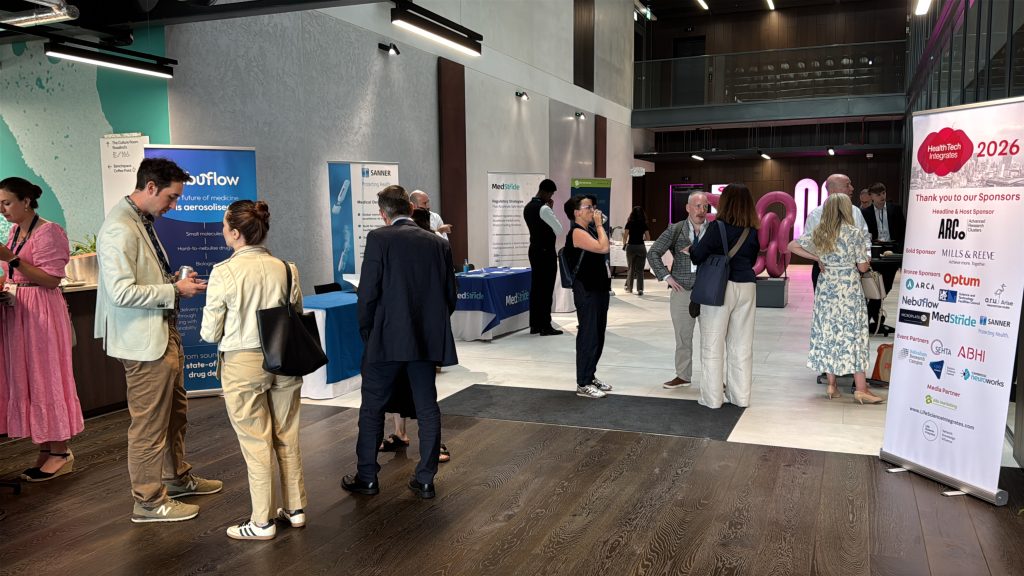
Hosted at ARC’s West London campus, a life sciences hub built in partnership with Imperial College and Imperial College Healthcare NHS Trust, the event brought together founders, clinicians, investors, regulators and NHS leaders for a vibrant day of panel discussions and networking. The setting was fitting: the former sugar refinery was established by a French entrepreneur who came to London because the UK offered stronger protection for his ideas, a reminder that innovation has always depended on the right environment, the right partners and the confidence to take risks.
“One of the biggest challenges facing health tech today isn’t a lack of innovation — it’s helping great companies bridge the gap between invention and impact.”
- Alex Lowdell, ARC


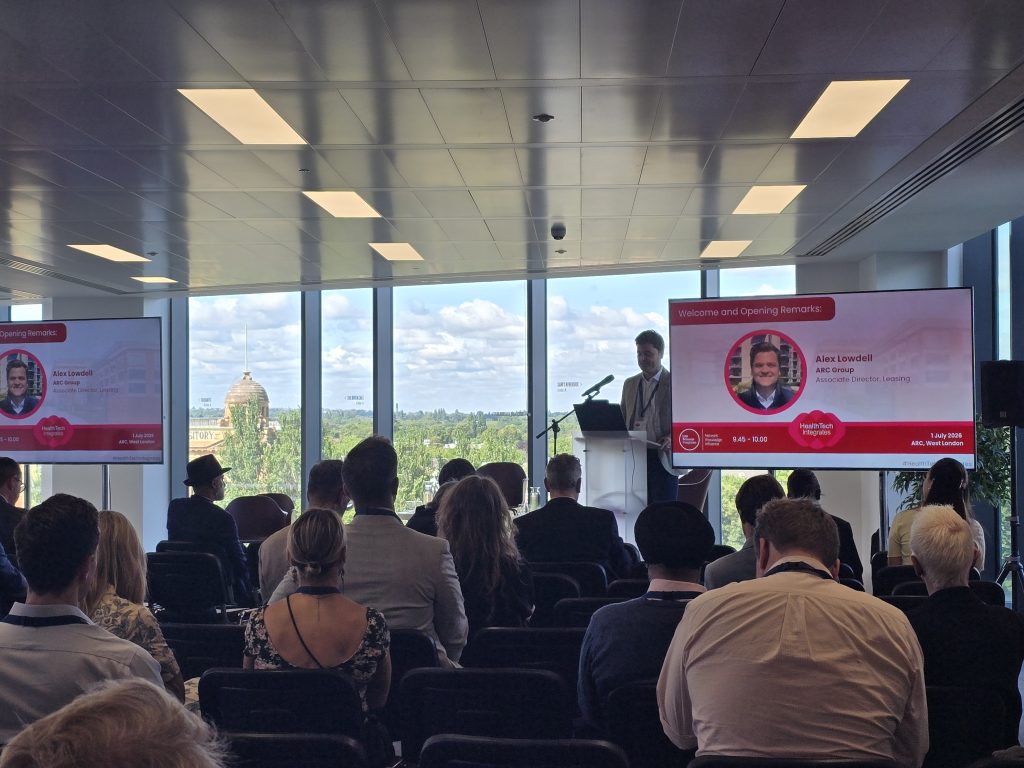
That gap framed the day. Across diagnostics, devices, AI and digital therapeutics, speakers were optimistic about the strength of UK science, the depth of its data assets and the diversity of its population, but clear-eyed about the obstacles that sit between a promising idea and a medical device embedded in the NHS: fragmented adoption, slow procurement, regulatory uncertainty and the constant pull of larger overseas markets.
Read on for the insights that emerged across the day, and what it will take to start closing the gap between invention and impact for UK health tech innovation.
Innovation isn’t the problem, adoption is
If one line captured the mood of the day, it was this: the UK does not have an innovation problem, it has an adoption problem. The science and engineering are world-class, the pipeline is accelerating and the ideas abundant, but the distance between a promising technology and one that is actually used at scale in the NHS remains the sector’s defining challenge.
“We need to remember that, for all the pain and misery and hard work of bu”Innovation is not the problem. It’s adoption that we have a problem with. Innovation without adoption is just potential. We’ve got to make sure that anything out there is ready for the system, can be delivered, and can be commissioned in a sustainable way.”
- Paul Holmes, Hologic
Part of the difficulty is structural. The NHS is often spoken about as a single 60-million-patient market, when in practice it is a fragmented collection of trusts, integrated care boards and commissioners, each with its own priorities, budgets and appetite for change. It is, without question, a hard system to sell into. But the tone of the day was far from defeatist, and that fragmentation is not only an obstacle: for smaller, early-stage companies, several panellists argued, it can actually work in their favour.
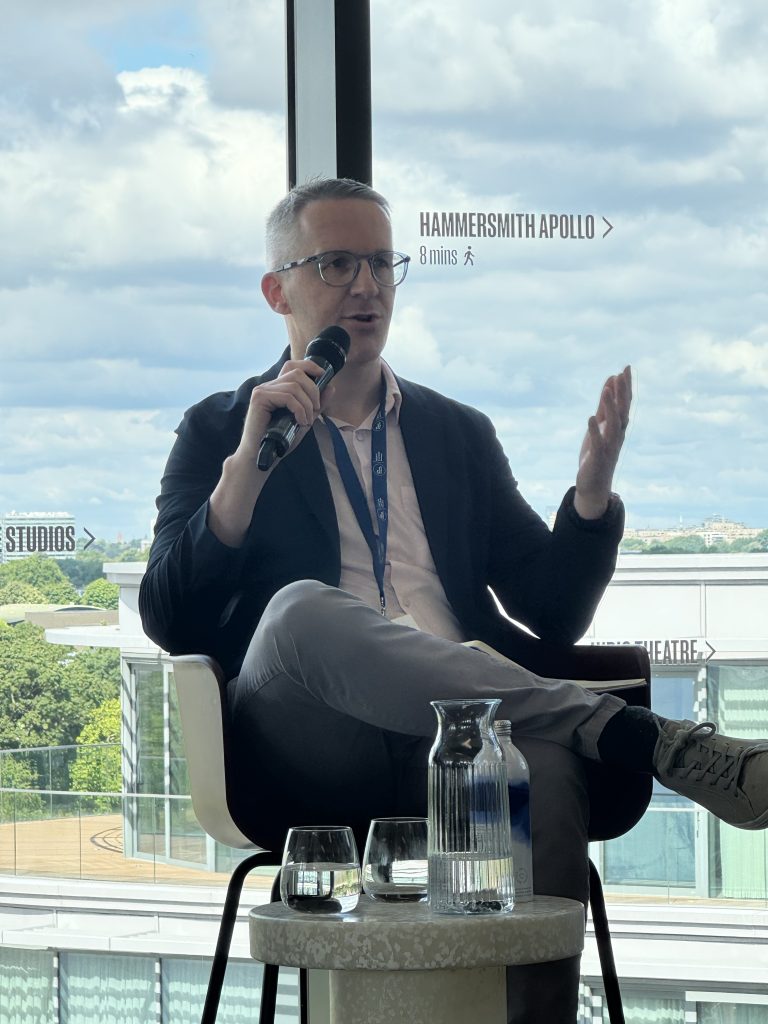
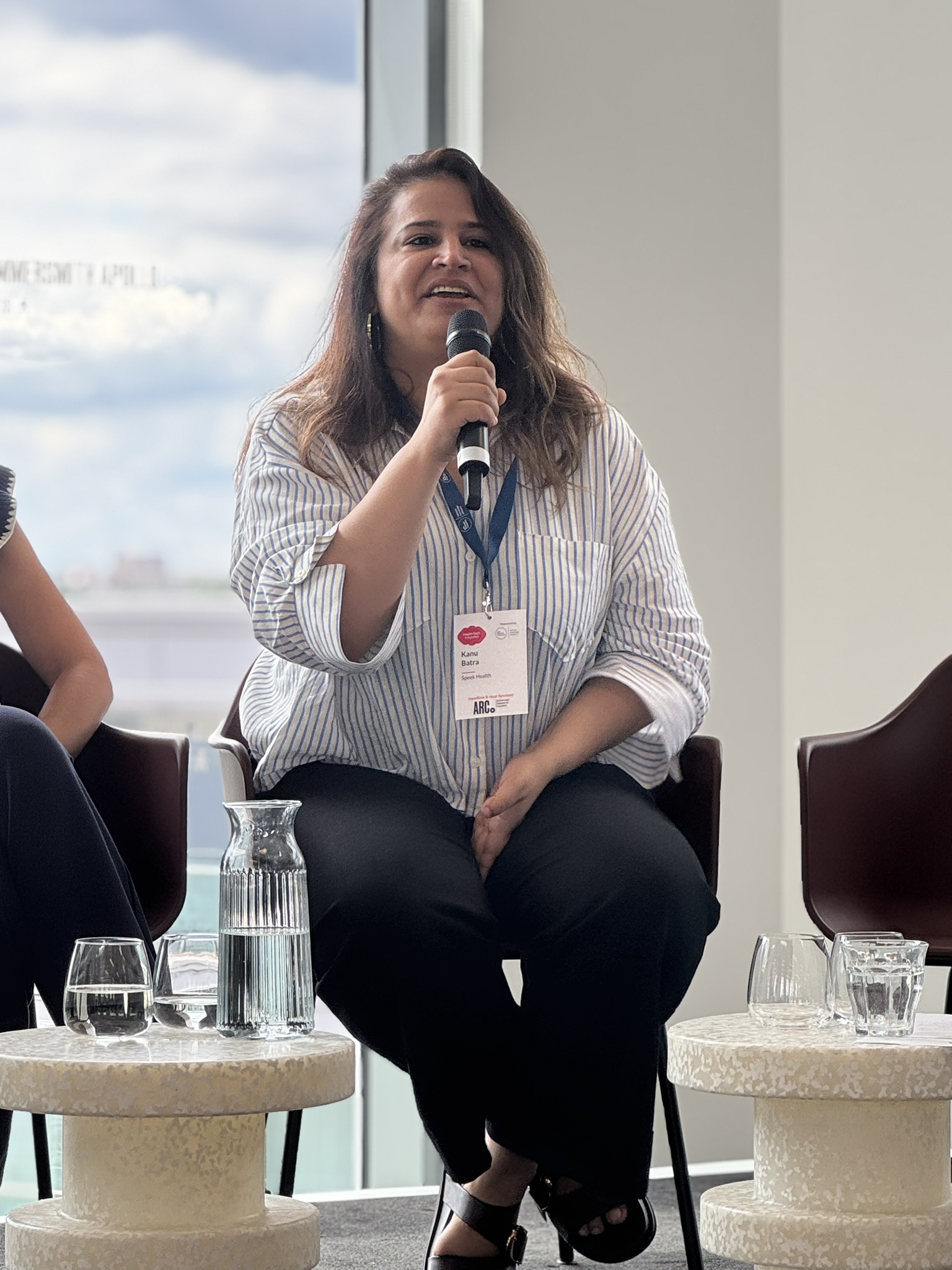
“I like the fact that there are 50 trusts I can sell to, because people’s capacity to manage their budget is very different in each location — which is a good thing in a way. Otherwise it becomes too bureaucratic and too long a process for early-stage companies.”
- Kanu Batra, Speek Health
The more useful distinction, raised repeatedly, was between a company being “NHS ready” and the NHS being ready for that company; a gap that has little to do with the quality of the technology.
“There’s being NHS ready, and then there’s the NHS being ready for you. You can be NHS ready and still not be used — and that’s a real conundrum.”
- Michael Watts, Blüm Health
That gap is won or lost on the practicalities rather than the pitch. Adoption is fundamentally a change-management problem: change only happens when the pain of staying the same outweighs the pain of changing, and a product that adds to a clinician’s workload won’t be used however strong its return on investment.
As for the levers that move the needle, a few recurred. Procurement is shifting from price and quality towards value, which several founders saw as a chance to compete on impact rather than brand. Interoperability was named as make-or-break, with calls for large electronic health record providers to be mandated to let smaller systems integrate. And there was support for ring-fenced implementation funding paired with more centralised due diligence.
Beneath all of them sits the economic case, yet even a compelling one can stall.
“Even if you have a product that’s incredibly innovative, with a huge amount of clinical data, if there isn’t already a pathway in place, it’s going to be an uphill challenge. Take a calibrated drape for postpartum haemorrhage — it would cost the NHS an additional one pound per birth, with exceptional data on quality-of-life improvements, and even at that price, getting it adopted has been a real challenge. You need incredibly solid economic arguments.”
- Claire Nicholson, Kimal
The unifying lesson was that adoption cannot be bolted on at the end. The companies most likely to succeed are those that design for it from the outset: defining the problem, building the health-economic argument, the pathway fit and the change-management plan alongside the technology, and engaging the system as a partner rather than a market to push into.
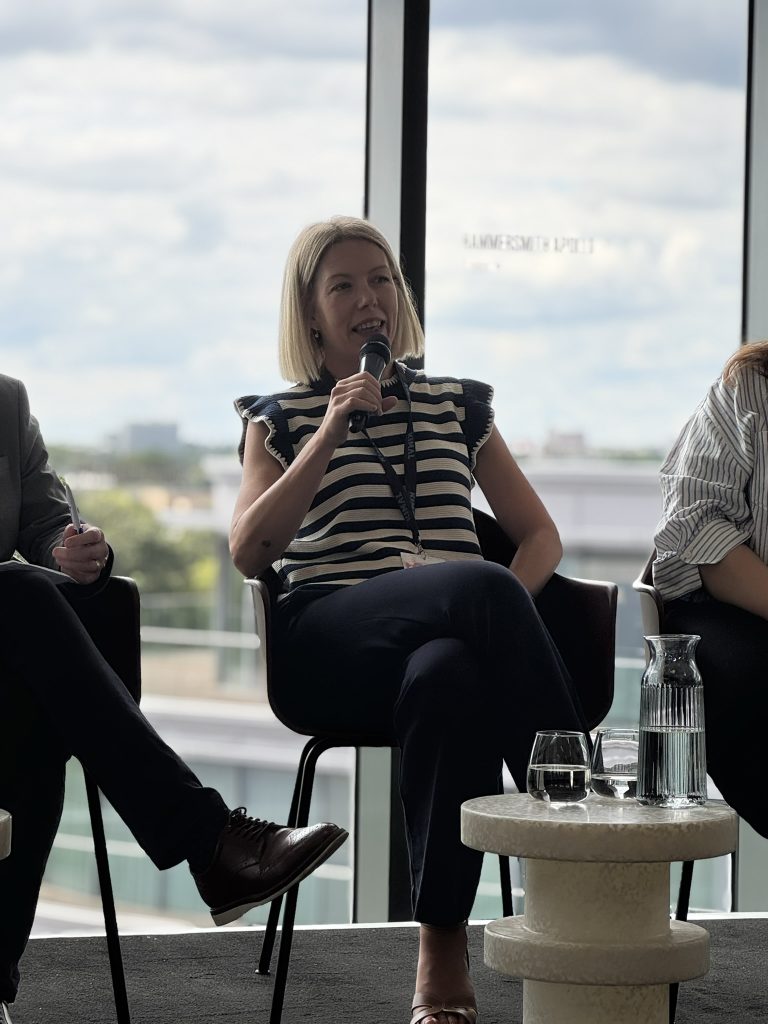
“We need to move towards more strategic commissioning of innovation based on unmet clinical need. Test your clinical pathways before you launch your company, before you raise funding. Start with place-based partnerships, and see it as a partnership from the start, rather than something you’re trying to bring into the NHS too late to adapt it.”
- Maria Koufali, NIHR
For UK health tech innovation, closing the gap between invention and impact starts here: not with a better idea, but with a better route in.
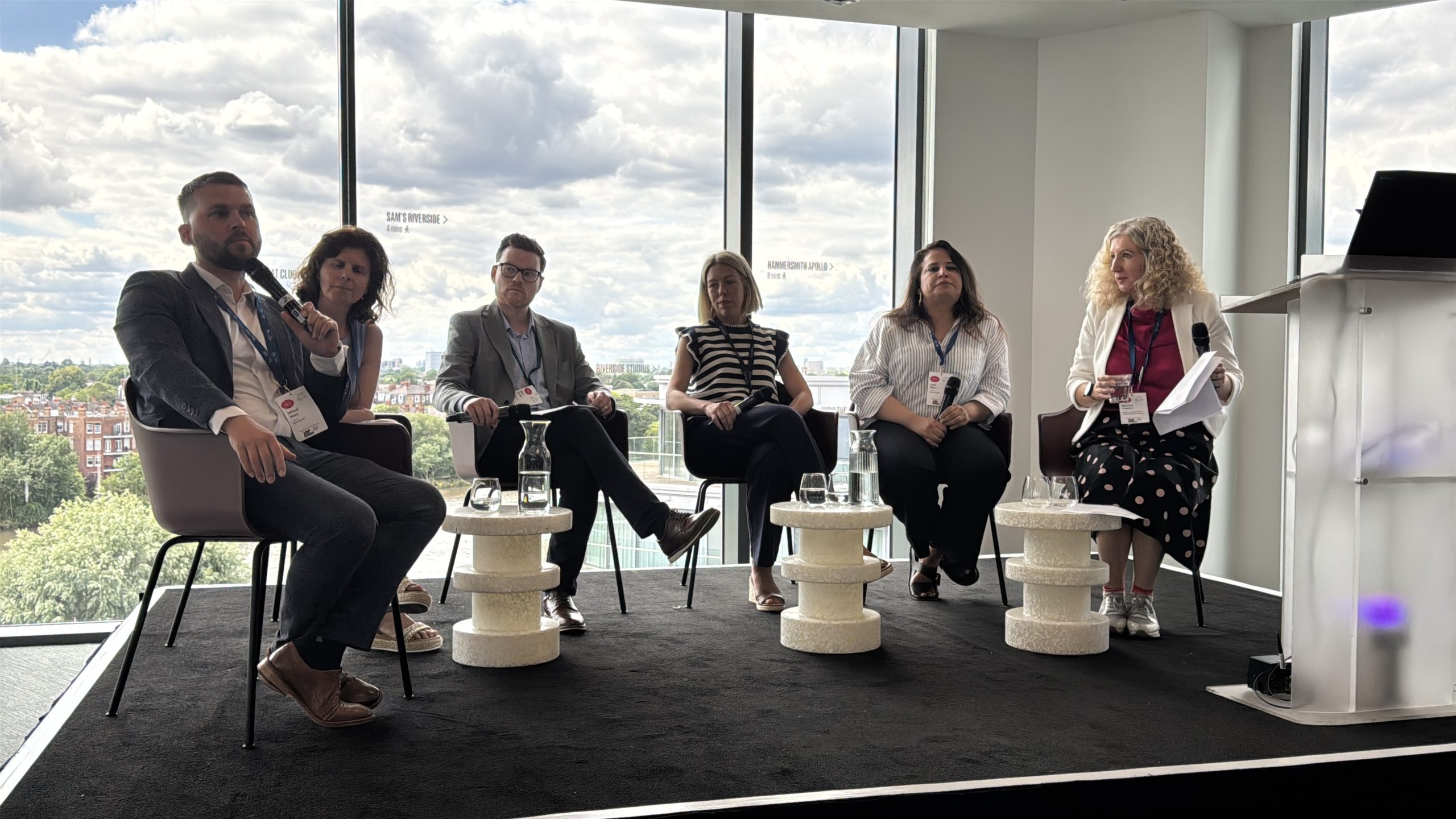
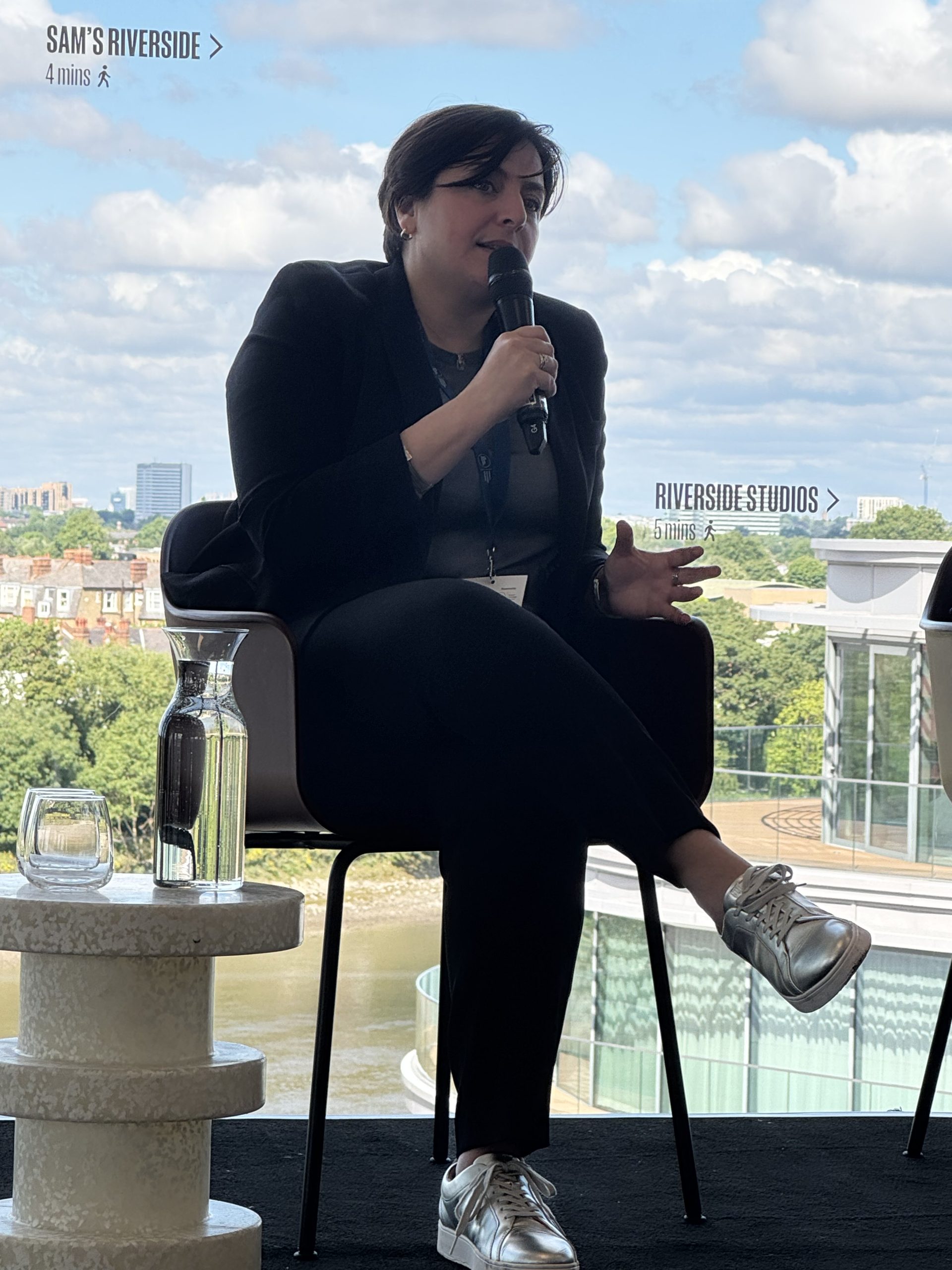
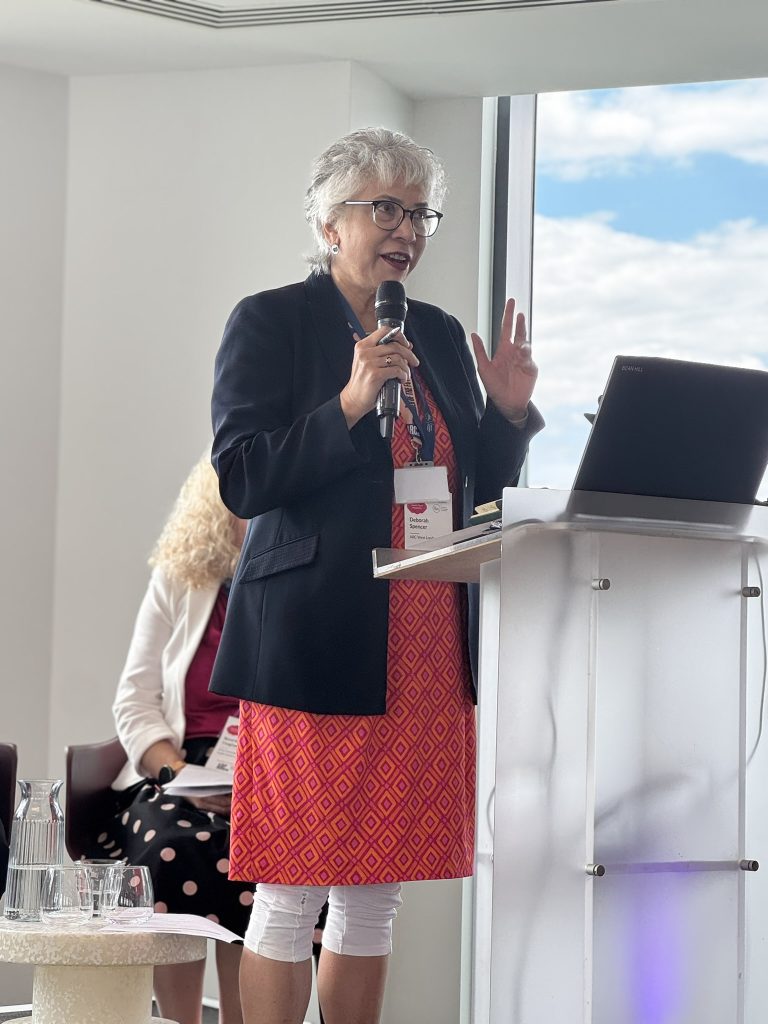
Michael Watts speaking on the ‘NHS Ready’ panel (left).
Maria Koufali, NIHR speaking on the Fireside Chat (right).
The global race: competing on speed and keeping innovation onshore
If adoption is the domestic challenge, the international one is speed. Several speakers described a UK that produces exceptional science but moves too slowly to capitalise on it — in a global market that is not inclined to wait. For an early-stage company with finite cash, every month of delay is money spent going nowhere.
“My runway is 150 days. That’s 46% of my year that I’m waiting for a trial to start. I have a team waiting to go. I want this trial to start quickly. I want recruitment to move ahead.”
- Wesley Sukdao, Proteotype Diagnostics
There was, though, real evidence that the picture is improving. The UK’s clinical trial set-up performance has been turned around in the space of a year — the proportion of trials meeting the 150-day set-up target rising from 45% to 73%, and median set-up time falling from 160 days to around 122. Speed is now the metric the UK is working hard to compete on, against the likes of Spain and Australia that have long recruited faster.
That urgency is sharpened by how quickly the global landscape is shifting — particularly the rise of China and the redrawing of trade relationships around it.
“The speed of innovation, the speed of expansion, the agility in the Chinese market and the use of AI is far outpacing what we’re seeing in the US. With some of the geopolitical situations, particularly in the Middle East, we’ve seen a rise in the Chinese market that I don’t think will regress.”
- Raees Lunat, PwC
The consensus was not that the UK should try to out-build China on cost or pace — a race most agreed it would lose — but that it should play to different strengths, and partner where it makes sense rather than compete head-on. Some made the case for collaborating with Chinese partners on specific trials in exchange for UK access, and for founders to think globally from day one rather than assuming a UK launch.
The clearest challenge that recurred throughout the day was that the UK’s strength in generating innovation is not yet matched by its record in commercialising and holding on to it; a distinction Innovate UK has built its new strategy around.
“We’ve been really great at catalysing innovation, but not so great at commercialising it. That’s something we need to change. We need businesses that can scale here in the UK, keep the business here, and expand globally, rather than going to other countries.”
- Jane Guest, Innovate UK
The prize, and the challenge, is to convert world-class health tech innovation into companies that scale and stay. That means competing on speed, backing businesses through the commercialisation gap, and building the capital and incentives to keep them, and their value, onshore.
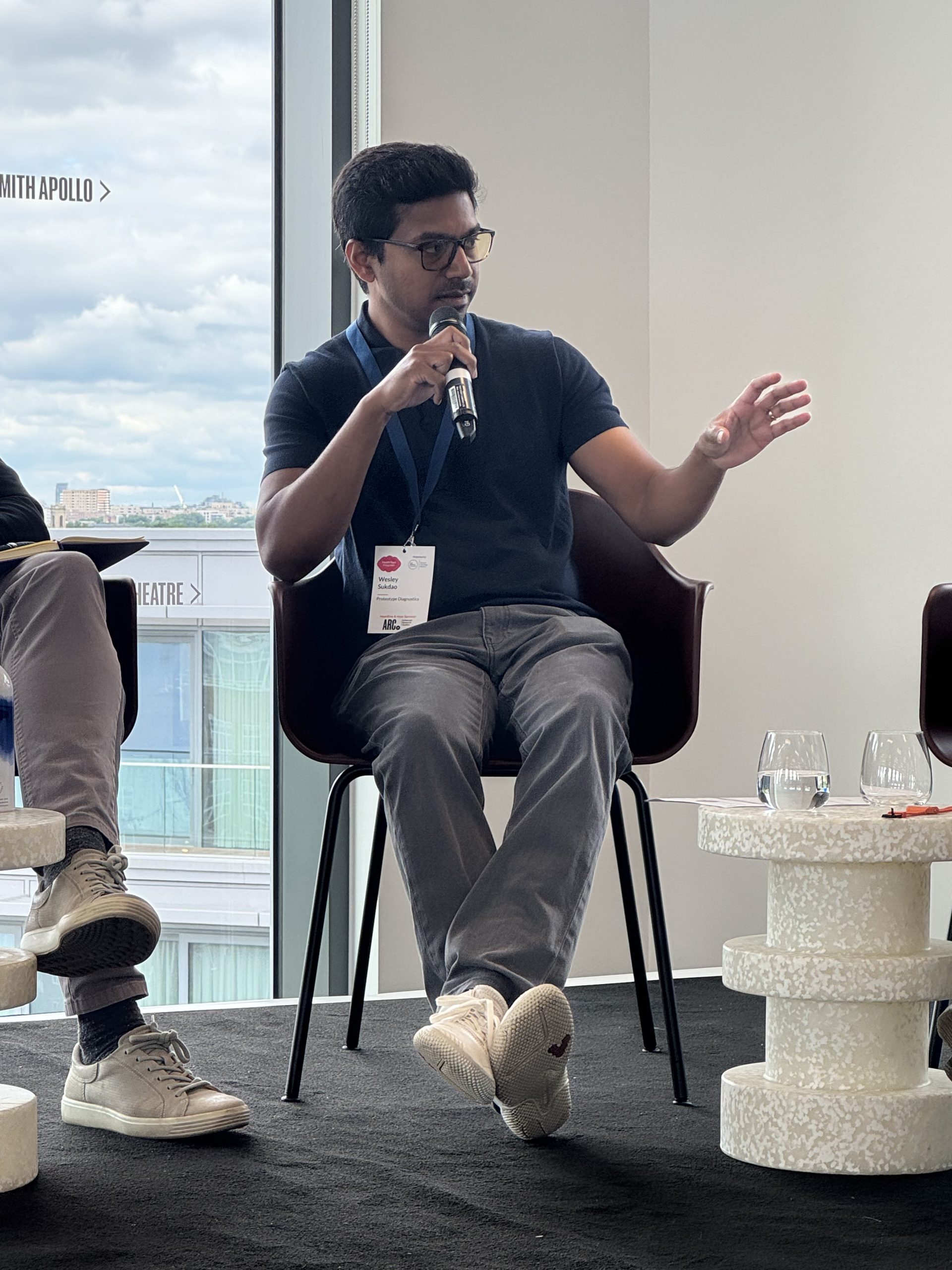
Wesley Sukdao from Proteotype Diagnostics (left).
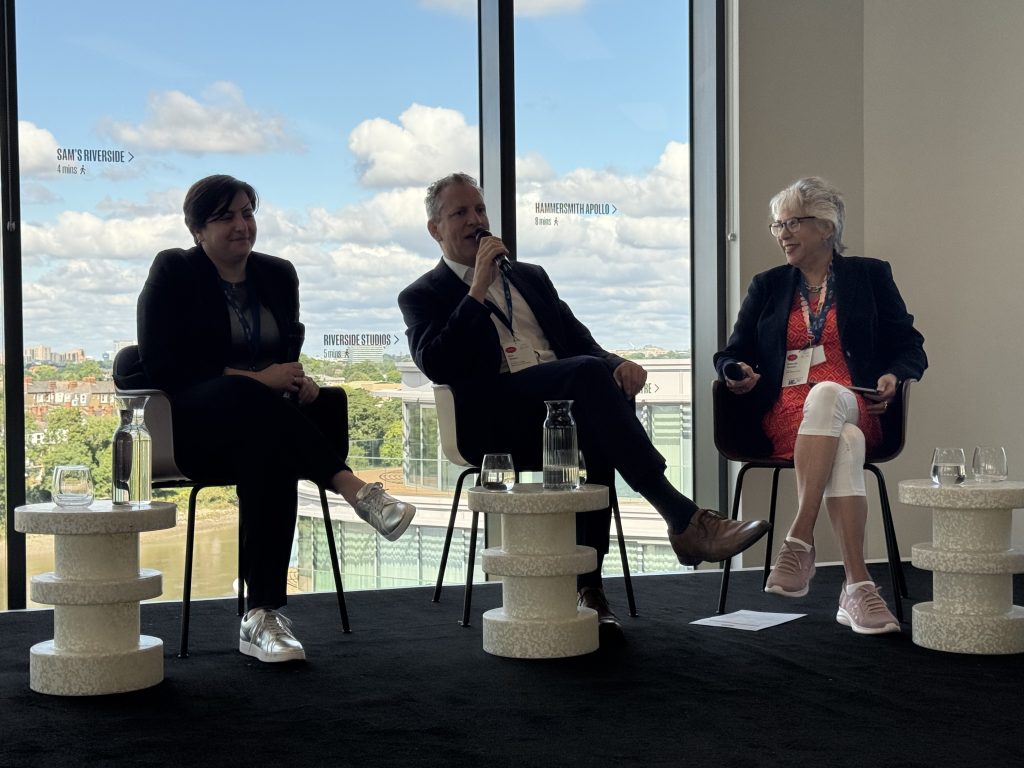
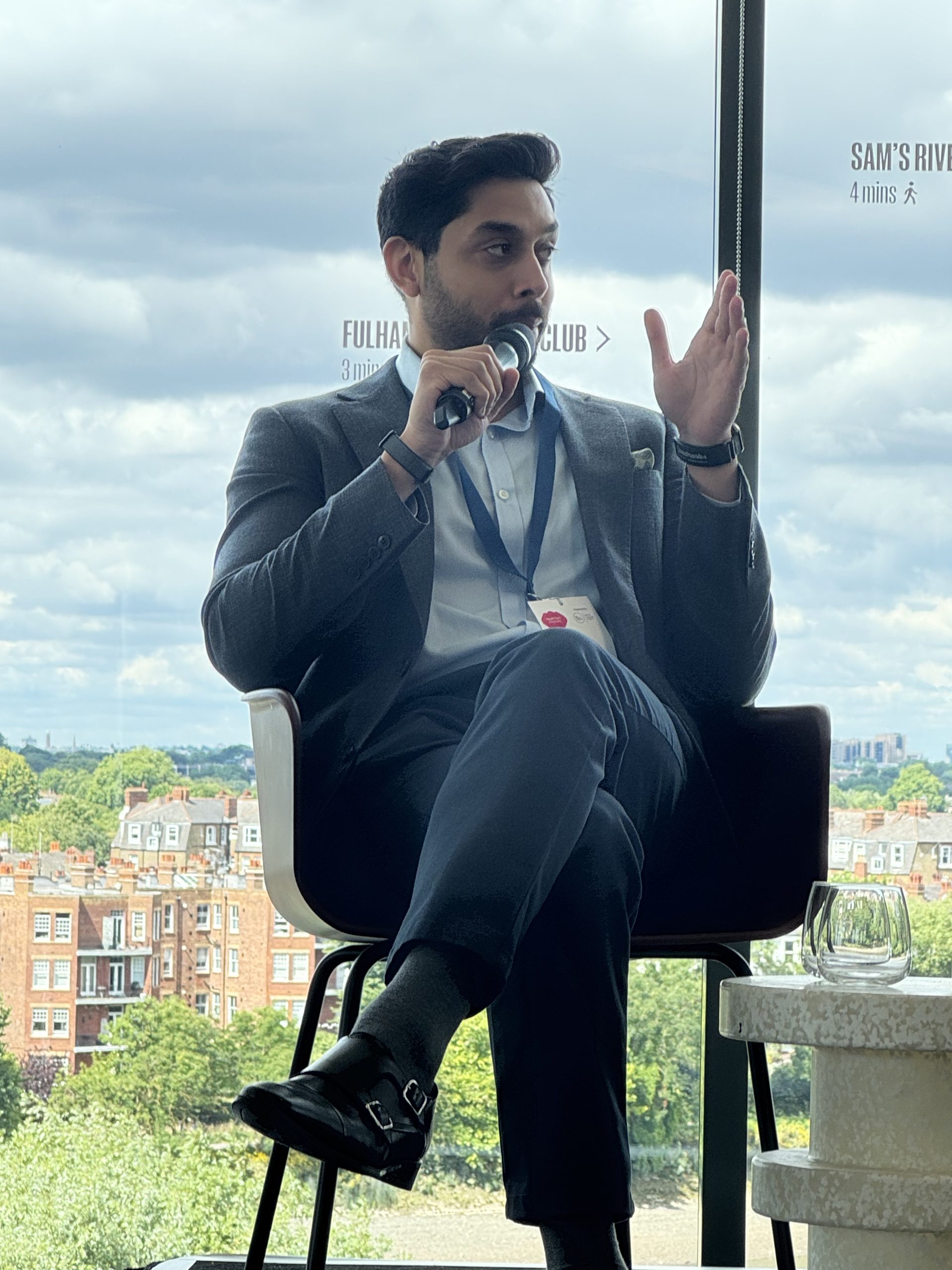
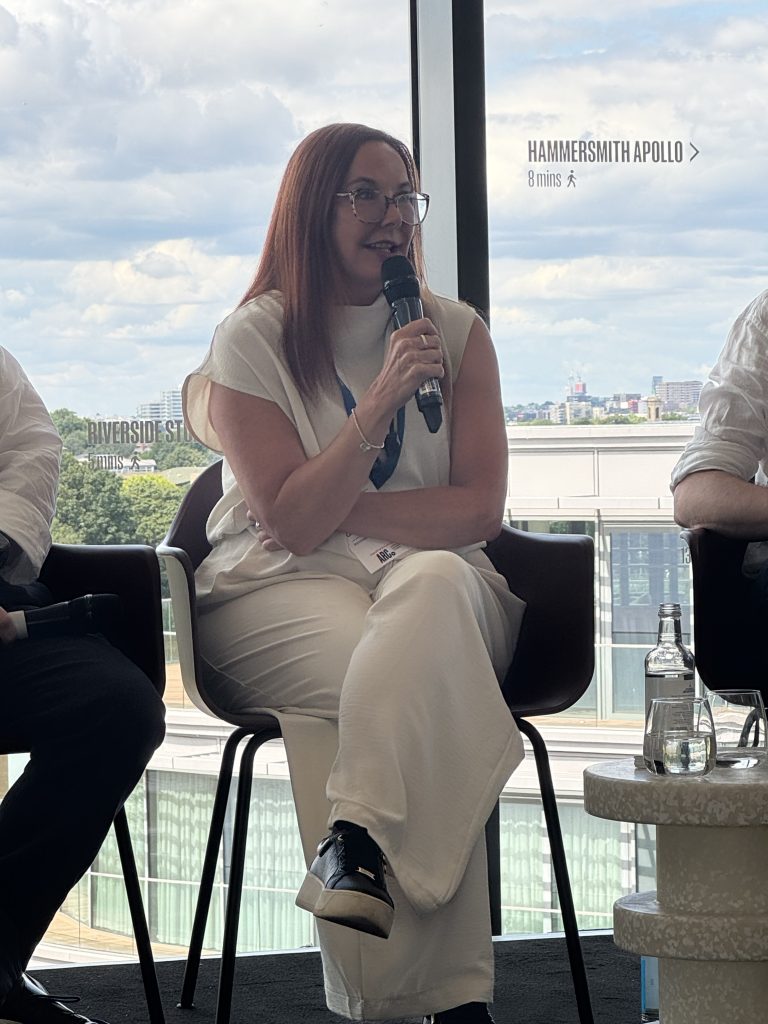
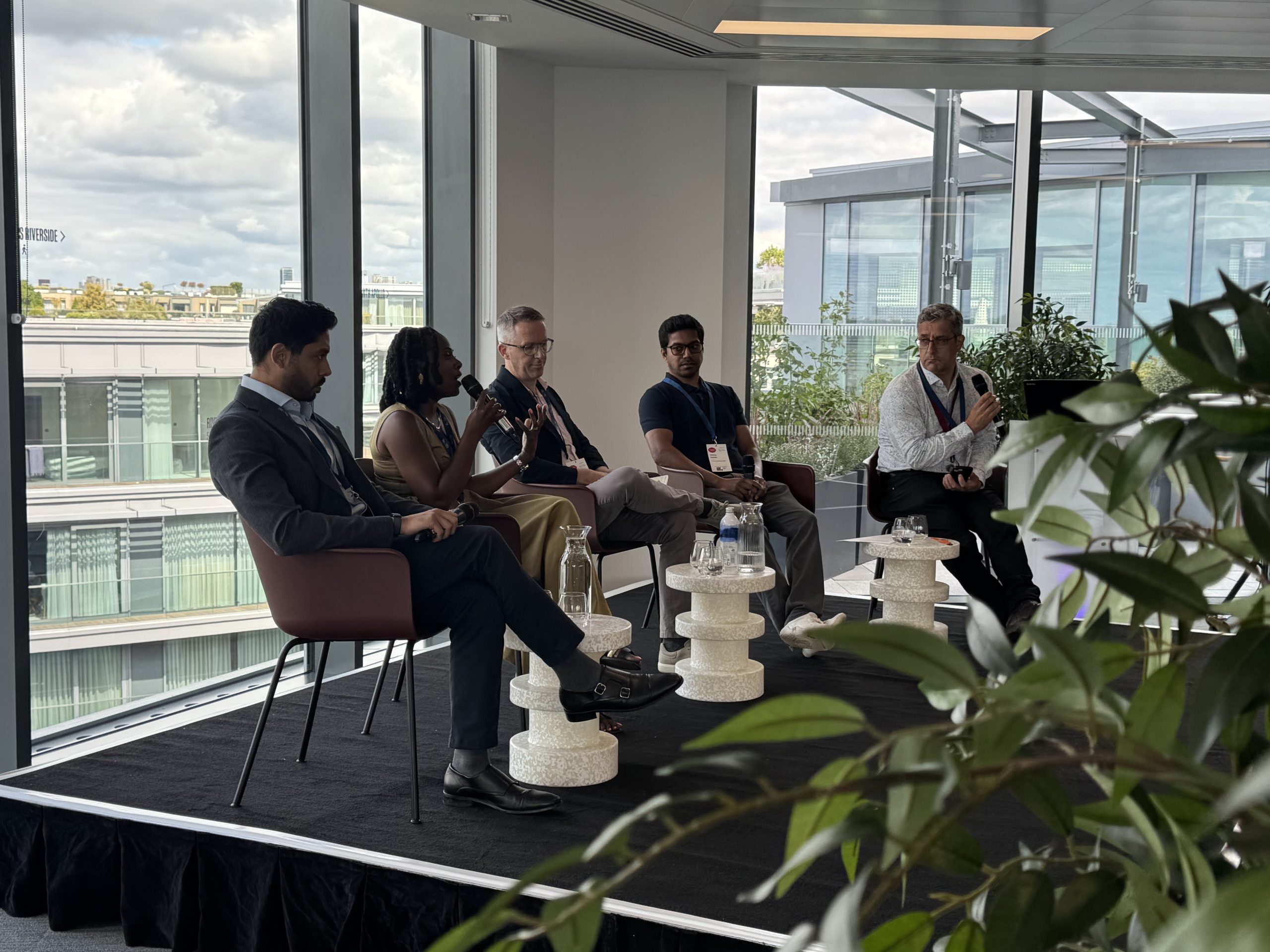
Katrina Douglas from OXLABS speaking on the ‘Tech Tides in Healthtech: Wearables, Robotics, AI & Beyond’ panel, facilitated by James Fry from Mills & Reeve (right).
Getting it right: regulation, partnership and the discipline to scale
The companies that struggle and the ones that thrive tend to differ on a single instinct: whether they treat regulation and partnership as foundations to lay early, or as obstacles to deal with once the technology is built. Across the day, the message was that both reward the former and punish the latter.
Regulation is the clearest case. Several speakers argued it is better understood as part of the route to market itself, rather than treating it as an obstacle to work around.
“I don’t like framing regulation as a barrier. You’d never expect a pharma company to try not to license their drug — regulation is a core part of how we scale. The difficulty comes if all that hard work doesn’t lead to adoption. That’s where the barrier really lies.”
- Will Goddard, Big Health
Handled well, approval is what earns the trust of clinicians and purchasers — the “stamps” a product needs to scale. What corrodes that trust is not rigour but uncertainty, and speakers pointed to the shifting guidance on whether AI tools such as ambient voice technologies count as medical devices as a case in point. Far from wanting less oversight, innovators asked for the opposite: clear, stable rules to build against.
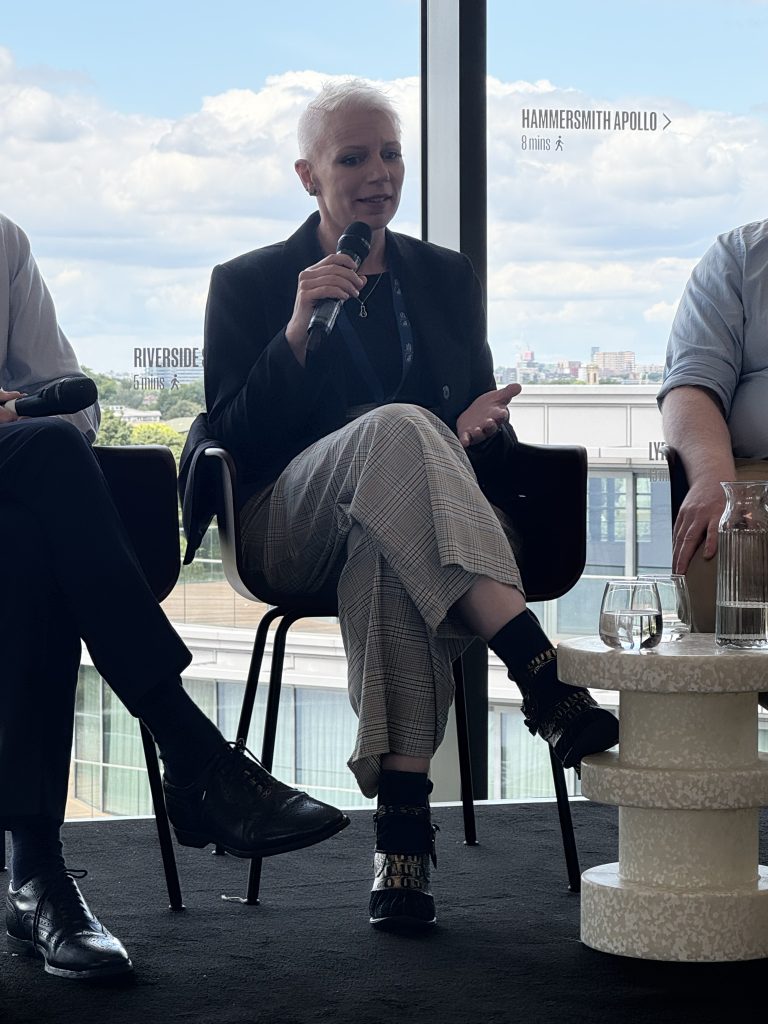
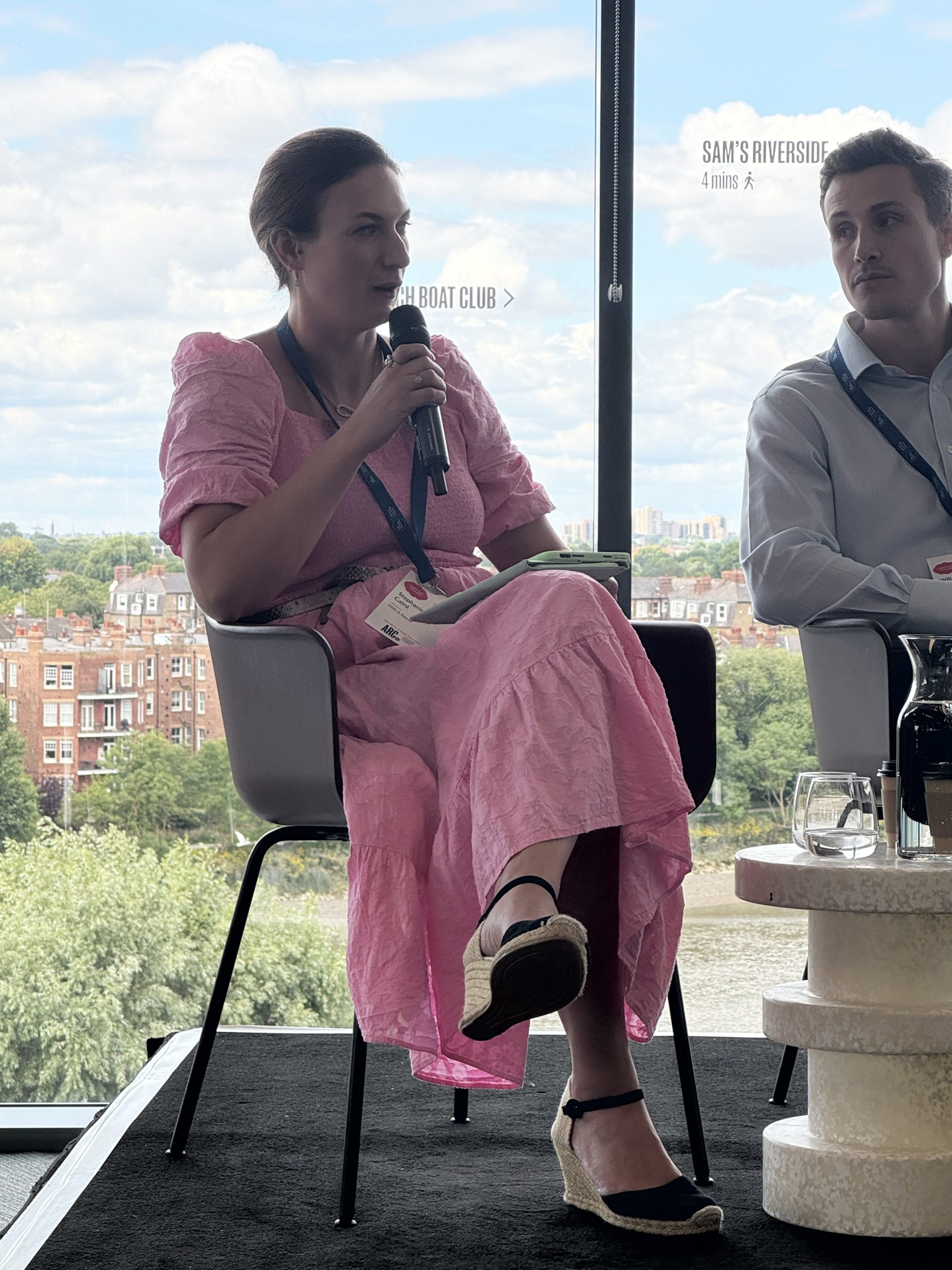
“What supports us most is clarity. It gives us the constraints to work within, and in that way, regulation supports the way we innovate. When those constraints aren’t clear – when there’s flip-flopping – that’s what hurts us.”
- Nina Goddard, Intuitive
The deeper difficulty is that the entire regulatory model was built for products that hold still: approved once, then largely unchanged. But AI breaks that assumption, offering a system that can behave differently from one week to the next, and the framework has no natural way to keep pace.
“We’re not dealing with something as static as a scalpel or an MRI scanner. With generative AI you might have a new version in 72 hours. You need to build ways to address that drift into your safety net and your guard rails.”
- Stephanie Caird, Mills & Reeve
Get regulation right early and it works for you; leave it late and it works against you. And that principle extends beyond compliance. The strategic decisions that shape a company — how it protects itself, how it grows, who it ties its future to — reward the same deliberate, early thinking. Partnership is another clear example: essential to getting off the ground, but perilous when rushed.
“Partnership is essential when you’re starting out — you build a team without spending money you haven’t got. But they can be dangerous. We partnered with a software company that went bankrupt, and a multinational that changed strategy overnight. Get it right, though, and they’re key to success.”
- Paul Ko Ferrigno, éclateral
The difference between a partnership that works and one that flounders, comes down to leading with the problem rather than the technology — and being honest about whether there is a genuine fit.
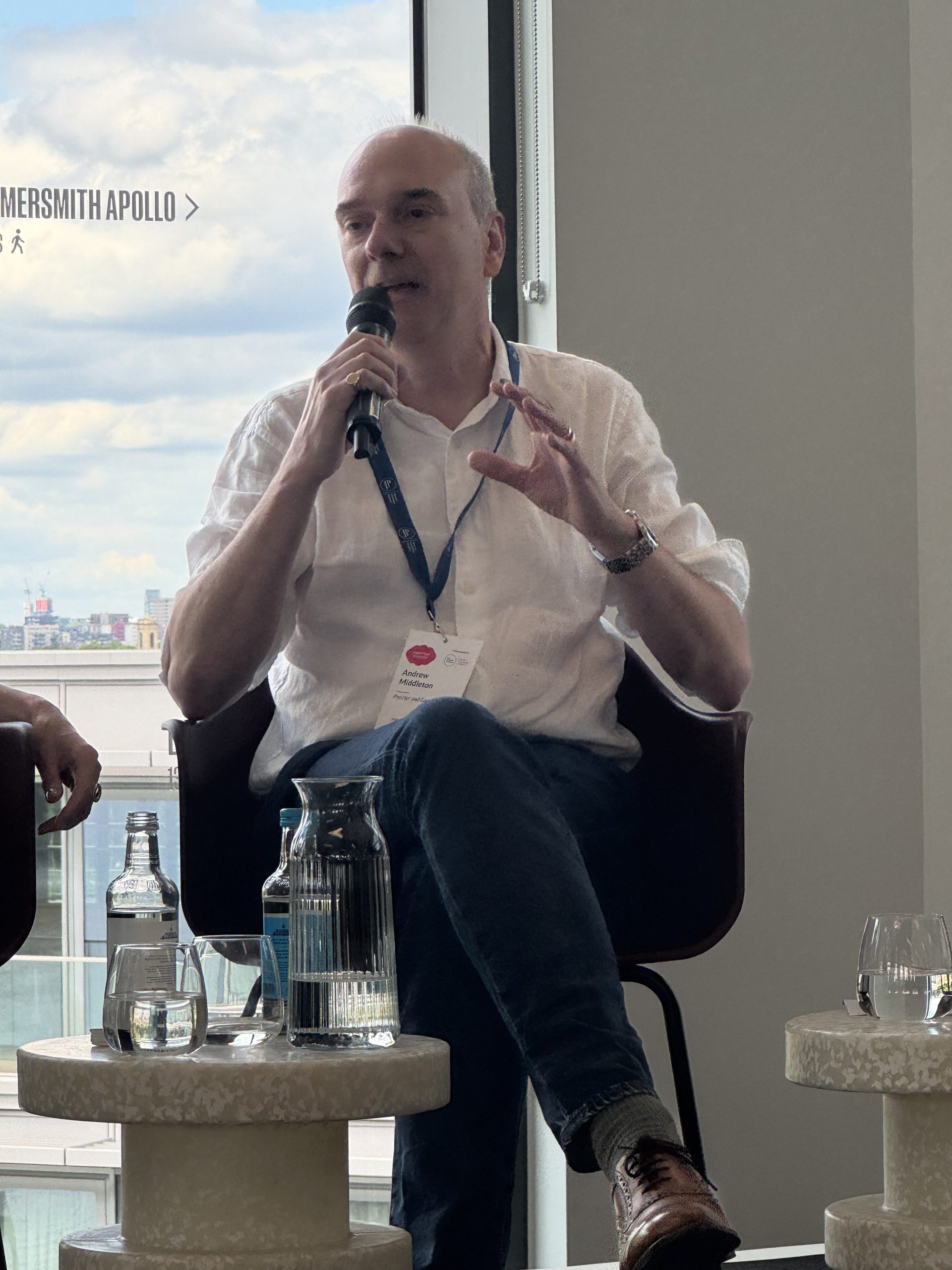
“Don’t just come to us with an idea; come to us with the solution to the problem we’ve got. And we always ask ourselves: are we the best owner? If someone can do it better, we’ll let good technology go.”
- Andrew Middleton, Procter & Gamble
That discipline — start from the problem and the people who benefit, not the product — was echoed as the surest foundation of all, and it ties partnership back to the adoption challenge that ran through the day.
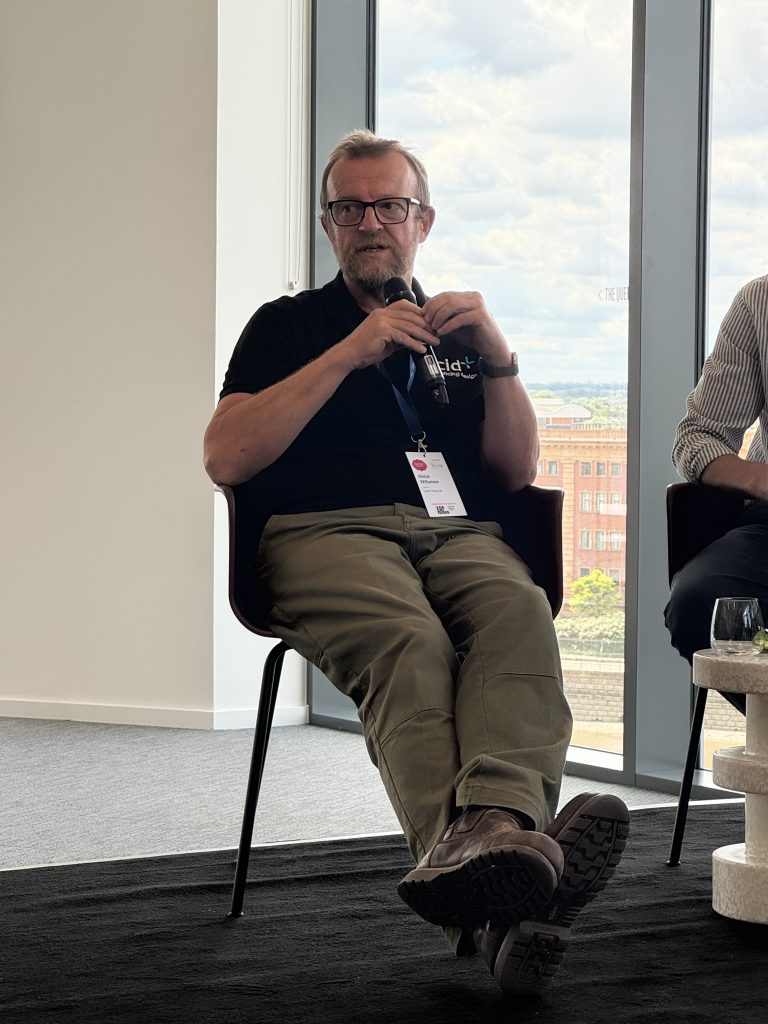
“My mantra is start at the end — not just the end user, but the end payer, and the people who are really going to benefit. If you’re in healthcare, those people are all around you. That first conversation can be with your Grandad.”
- Alistair Williamson, Lucid Group
Regulatory or commercial, the pattern was the same: build it in from the outset, and the path to scale shortens dramatically. Leave it to the end, and even the strongest health tech innovation can stall.
Closer to the patient: prevention, early detection and the pipeline
For all the talk of procurement, regulation and scale, the day kept returning to a simpler test: is any of this actually reaching patients earlier, and closer to home? The NHS’s three shifts — hospital to community, treatment to prevention, analogue to digital — framed the discussions, and the technologies on show were starting to make them real.
The starting point, more than one speaker insisted, is not the technology but the patient — and building around them from the very first day.
“Anybody setting up a company, project or idea who hasn’t got patients involved right at the beginning is doomed. You might still succeed, but you’ve got far less chance. If you do one thing after this conference, go and fix that — it has to be the place you start.”
- Bob Klaber, Imperial College Healthcare NHS Trust
That principle was visible in the innovations themselves. The shift of care into the community only works if community teams have the information to act on, and too often they don’t, making empirical “best guess” decisions where hospital-level diagnostics would give them certainty. Closing that gap is what a new wave of rapid diagnostics is chasing.
“We’re moving responsibility onto community teams, but not always giving them the diagnostic information they need to make truly informed decisions. What we want is to bring that susceptibility and resistance information much closer to the point of decision — so clinicians have the confidence to make the right call.”
- Stuart Hannah, Microplate DX
The day also featured a session in which four early-stage founders pitched their companies to the room. It offered a snapshot of the pipeline coming through; much of it built for exactly this shift, with earlier detection, care at home, and a hard focus on real patient need over technological novelty. One captured the gap between tomorrow’s therapies and the tools meant to deliver them.
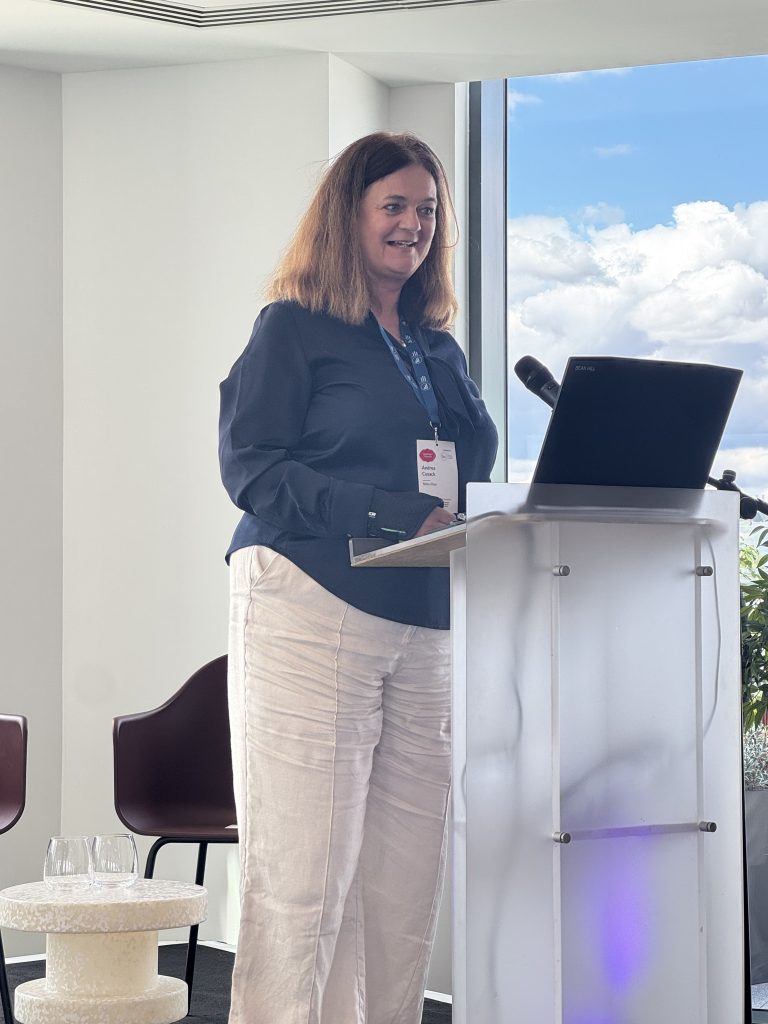
“Nebu-Flow is focused on precise, efficient drug delivery for the benefit and quality of life of patients. The lungs are a great route of administration, but existing nebulisers only deliver around 10% — 90% is wasted, which means cost, poor patient outcomes and higher production costs.”
- Andrea Cusack, Nebu-Flow
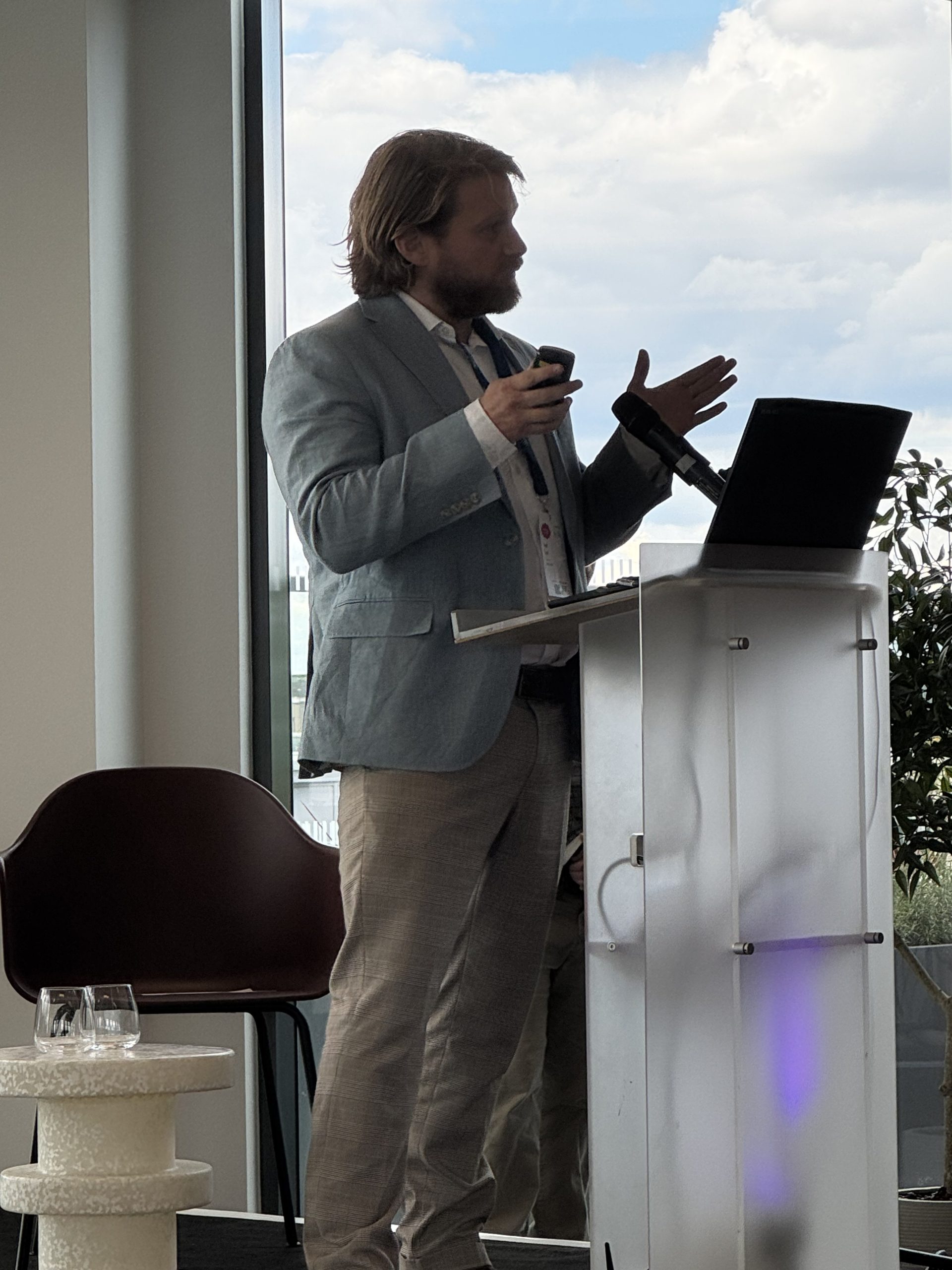
The others spanned the breadth of the shift. Instance is building a preventative “digital health twin”, bundling biomarker, genetic and lifestyle data into a single view designed to keep people engaged in their own health over time. Earswitch is tackling the accuracy gap in wearables, moving vital-sign monitoring to the ear to deliver medical-grade readings. And Anisys is bringing diagnosis and biofeedback therapy for stigmatised incontinence disorders out of specialist centres and into the community, on a portable, low-cost device.
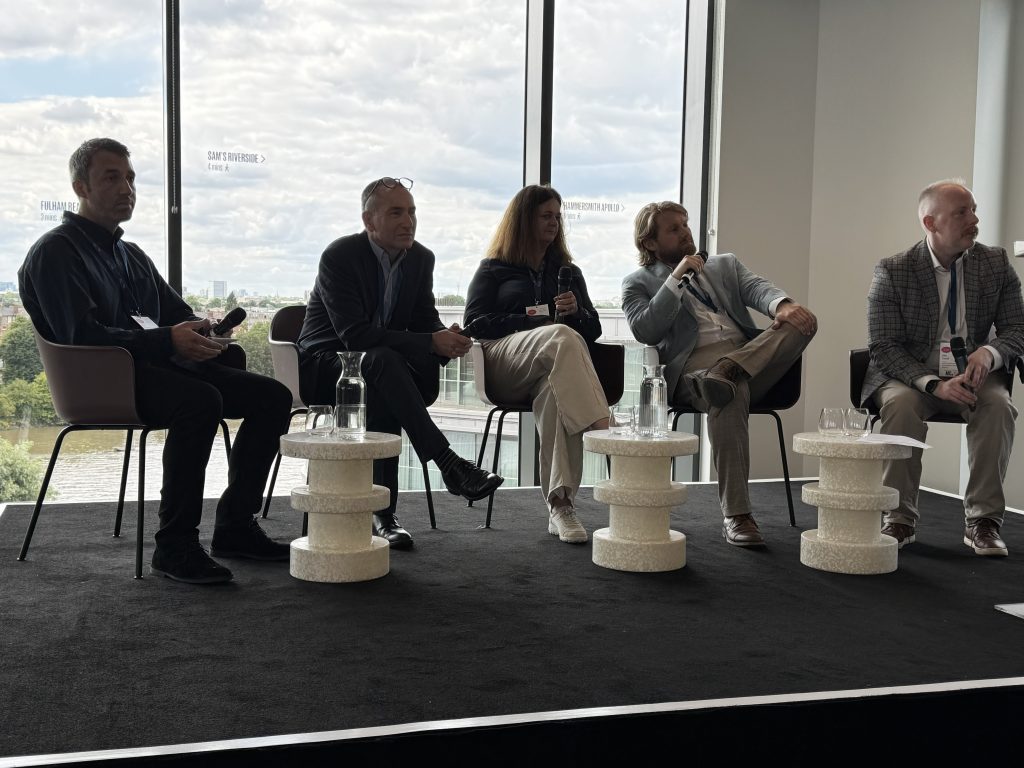
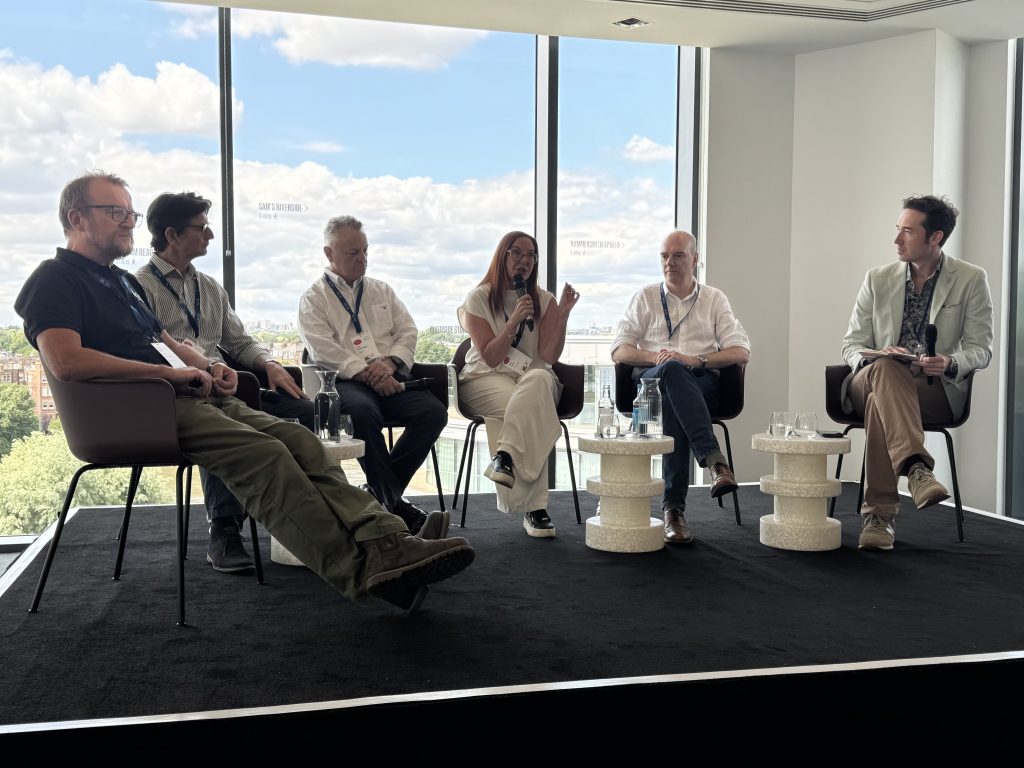
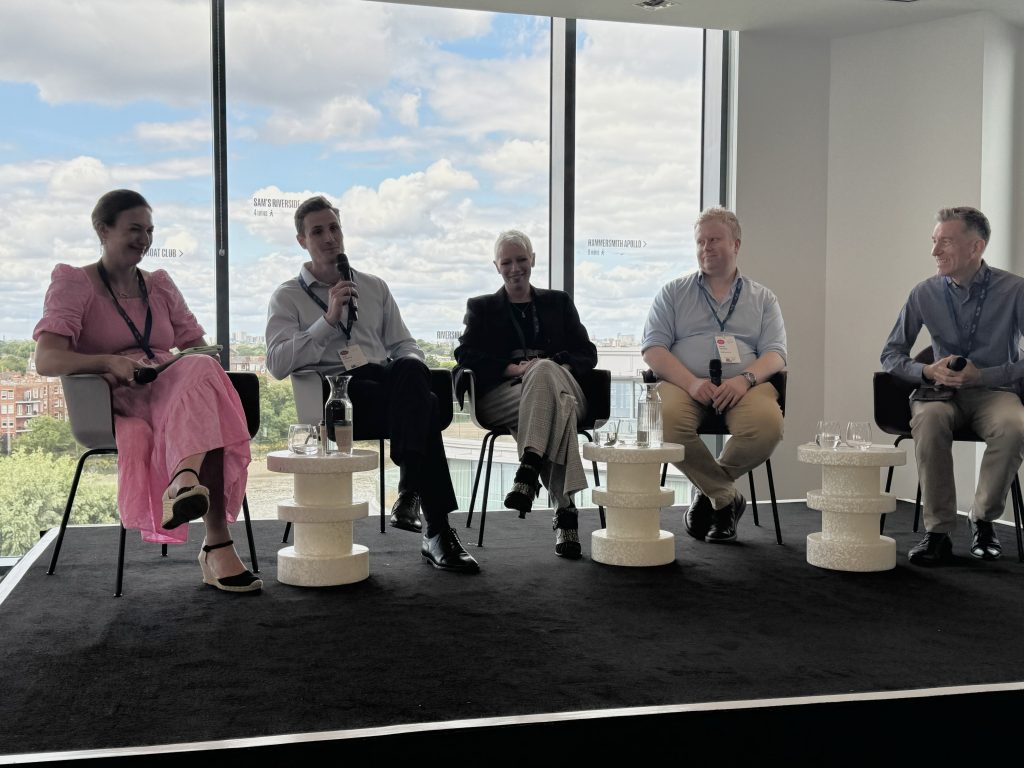
Phil Carvil (seated on the right) facilitating the ‘What’s Coming Down the Pipeline?’ presentation session
Prevention, though, remains the hardest of the three shifts, and speakers were honest that the UK has never been good at it, with a health service still funded like a repair shop rather than one built to keep people well.
From adolescent mental health delivered at home to medical-grade wearables and next-generation diagnostics, the through-line was consistent: technology earning its place by meeting a genuine need, in the right setting, at the right time. For health tech innovation to deliver on the three shifts, it has to reach people earlier, closer to home, and built around what they actually need.
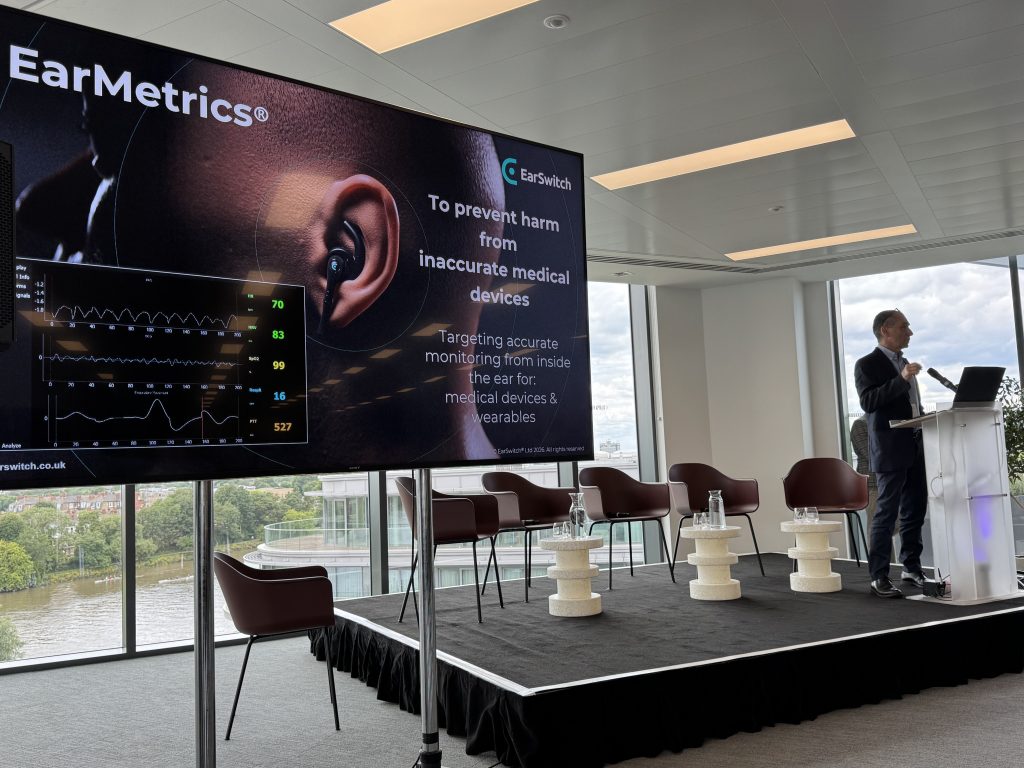
Nick Gompertz presenting for Earswitch (left).
Jed Lye presenting for Instance (right).
From invention to impact
For all the frustrations aired across the day — the slow procurement, the mixed regulatory signals, the innovations lost to overseas buyers — speakers at HealthTech Integrates 2026 struck a cautiously optimistic tone.
The UK still holds a hand few countries can match: world-class science and engineering, an unusually rich and diverse dataset, a regulator leaning into the challenge, and a generation of founders building exactly what the health system needs.
The recurring challenge was not capability but translation: the distance between a brilliant idea and a technology working at scale in the NHS. Closing it depends less on better science than on the conditions around it: quicker adoption, patient capital that stays home, joined-up regulation, and stronger cross-industry partnerships.
Innovation was never the problem. Closing the gap to impact is the opportunity now within reach.
Thanks once again to all of our sponsors and partners













Sponsoring our Conferences
Interested in sponsorship at our events? Please get in touch or click below to send your enquiry over to us.
Announcement: PharmaTech Integrates 2026 is officially open for registration!
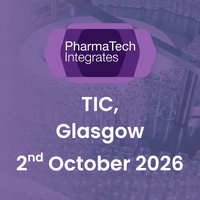
PharmaTech Integrates brings together experts in medicines manufacturing and the technologies transforming it. This event engages the broadest possible network of pharmaceutical innovators, regulators, supply chain partners, equipment and technology providers, academia, and industry associations.
Life Science Intelligence

Interested in reading about current industry trends in Life Sciences? You can find out more on our Life Science Intelligence page, including previous reports, news and articles.
Stay Connected
For further updates, stay connected on our LinkedIn page below.