Pharma Sustainability Integrates 2026: Industry Intelligence Report
Turning ambition into action: the environmental, operational, and societal imperative for UK pharma.

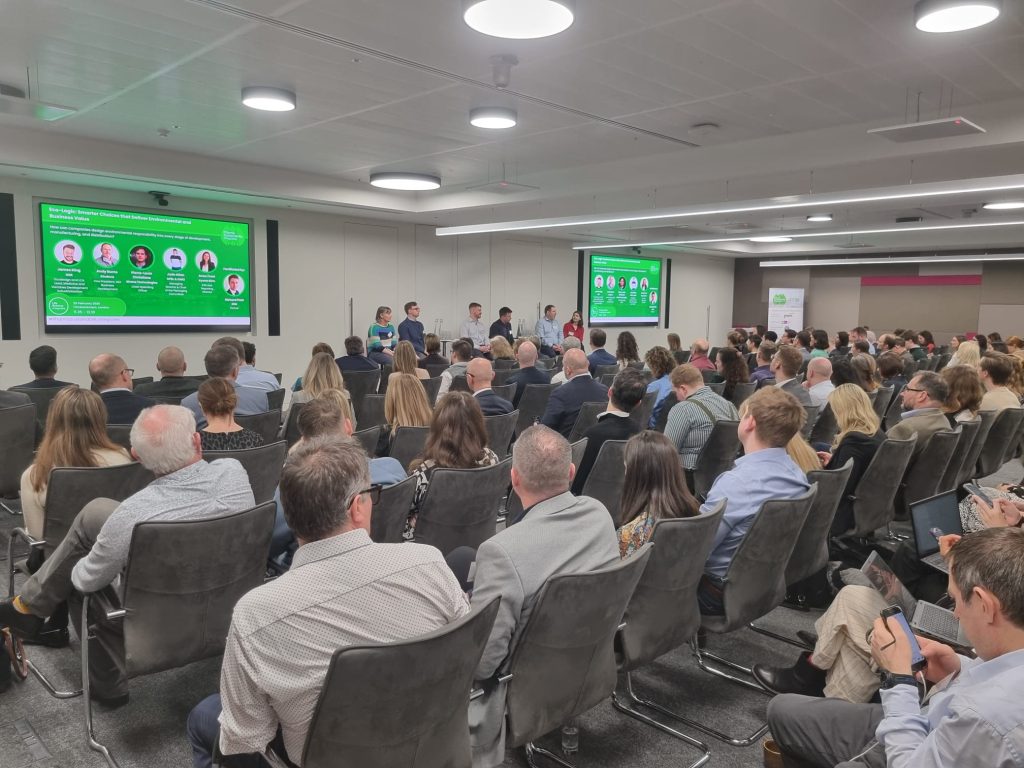
Pharma Sustainability Integrates 2026 convened at PwC UK’s headquarters in London, where leaders from across life sciences, healthcare, policy, and technology gathered at a moment when the sector faces both unprecedented environmental pressure and opportunity to shape change. As host and platinum sponsor, PwC provided a fitting backdrop for a day centred on strategy, innovation, and accountability across the pharma value chain.
The consensus across the day was clear: sustainability is no longer a reporting exercise. It is now a redesign challenge touching every aspect of the value chain, from how medicines are discovered, manufactured, delivered, and used, to how healthcare systems think about prevention, population health, and resource stewardship.
The urgency of this transformation was set powerfully in the opening fireside chat of Pharma Sustainability Integrates, where intensive-care physician and climate scientist Prof. Hugh Montgomery OBE underscored the accelerating reality of climate change, and the stark risks that affect us all:
“Emissions are still going up: 0.8% the year before last, 1.1% last year, reaching 58 billion tonnes of CO2. We now have 17 positive feedback loops driving further warming. We’re taking in the energy of nearly 15 Hiroshima bombs every second. Without immediate, transformative action, we face societal collapse within our lifetime.”
- Prof. Hugh Montgomery OBE, UCL & Real Zero
His message set the tone: healthcare contributes around 5% of global emissions, split almost equally between the development and manufacture of medicines and the delivery of care. Through the day’s discussions however, a picture emerged of an industry taking on the challenge head-on – and becoming increasingly aware that the sustainability transition cannot be achieved in isolation.
This Industry Intelligence Report captures the key insights, themes, and signals from the day – and explores how pharma can move from ambition to action in the decisive years ahead.
From reporting to redesign: sustainability as a business imperative
Throughout the day’s discussions, a clear theme to emerge was that pharma sustainability has moved far beyond compliance. It is now a core business issue shaping strategy, investment, operations, and long-term value creation across the pharmaceutical and healthcare ecosystem.
Speakers highlighted that the environmental agenda increasingly aligns with, rather than competes against, commercial performance. Strong sustainability capability strengthens organisational resilience, protects supply continuity, guides investment decisions, and prepares businesses for rapidly evolving expectations from regulators, health systems, and investors.
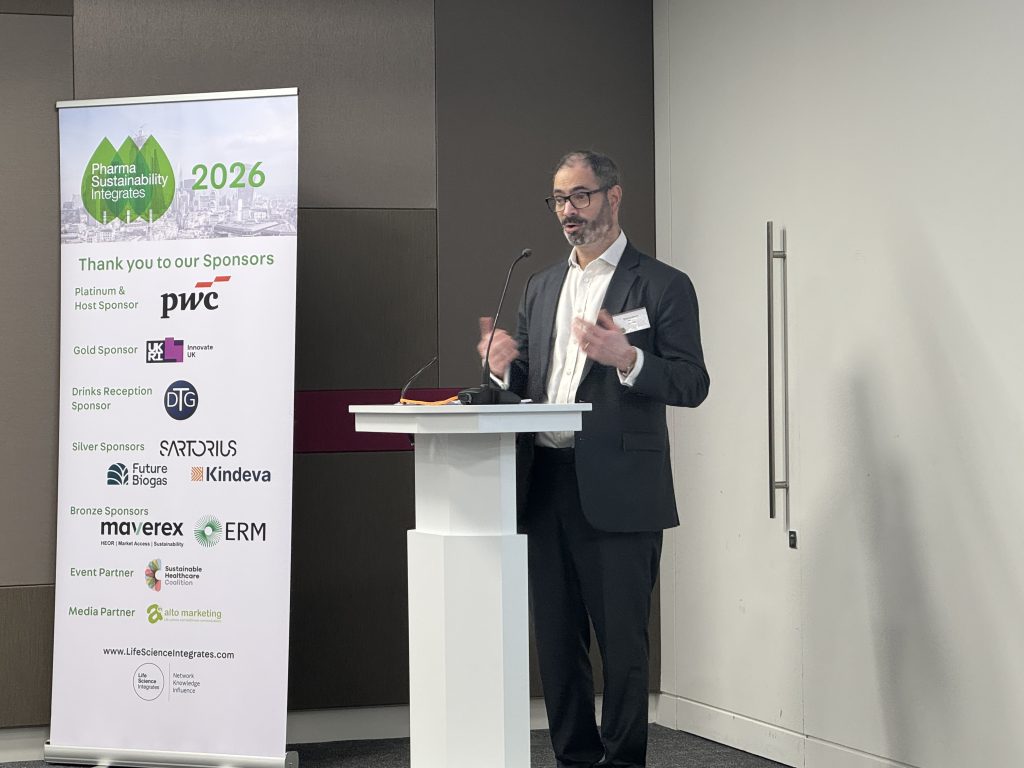
“Sustainability now shapes how companies think about risk, resilience, reputation and regulation – but it also increasingly shapes business performance. We’re seeing organisations embed it into core strategic decisions, not because they ‘have to’, but because it makes them more competitive and more resilient over the long term.”
- Stephen Aherne, PwC UK

As organisations mature their sustainability strategies, the focus is shifting from standalone initiatives to enterprise-wide redesign. This includes building robust data foundations, integrating climate considerations into R&D and care-pathway planning, and re-engineering operational processes to improve both environmental impact and economic efficiency.
“There needs to be a full realisation across the organisation that sustainability impacts the business, impacts care systems, and impacts care delivery. We cannot treat it as something separate. We need to transform our current ‘business-as-usual’ model, and that requires alignment, education and engagement at every level.”
- Katerina Maslova, AstraZeneca
Real progress, however, cannot be delivered in isolation. Much of pharma’s environmental footprint sits beyond the factory gate, requiring new forms of collaboration with suppliers, health systems, regulators, and cross-sector partners. Throughout the day, participants emphasised that shared objectives, transparent data, and aligned incentives are essential to unlocking meaningful progress across the value chain.
AI, data and the next wave of sustainable innovation
AI and advanced data capabilities emerged as a powerful enabler to accelerate the transition to a more sustainable pharma industry. Across multiple panels, speakers highlighted how digital technologies are accelerating the pace, accuracy and impact of sustainability decision-making.
AI’s greatest value lies in its ability to connect fragmented datasets across the pharmaceutical lifecycle. From R&D to manufacturing to supply-chain operations, companies are increasingly using AI to identify carbon hotspots, improve resource efficiency, and strengthen circularity. What previously took months of manual data collection, such as lifecycle assessments or materials analysis, can now be completed in hours, freeing experts to focus on interpretation, decision-making, and action rather than information chasing.
“To do a proper life-cycle assessment and get it verified takes four to six months. Having access to AI to link all the different enterprise systems can significantly speed that process up – and that allows you to actually do something useful with the data.”
- Giuseppe Whelan, GSK
Another theme at Pharma Sustainability Integrates was the importance of clear risk-tiering. Not all AI use cases carry the same consequences, and companies are increasingly adopting structured frameworks to distinguish low-risk applications from those requiring human oversight or deeper scrutiny. This approach allows innovation to move quickly where safe to do so, while protecting decision-making in more sensitive areas. It was also suggested that AI models could be brought in-house to maximise data security and reduce organisational risk.

“We don’t need to run every model in the cloud. In pharma we have sensitive and very valuable data – we can run models locally on-premise, protect our IP, and reduce reliance on large data centres.”
- Swapnil Khadke, Intelligence Q
Yet, digital capability alone is not enough. Several speakers emphasised that AI-driven sustainability requires cross-functional collaboration, both within organisations and across partners. Training models on supply-chain data, integrating design-phase inputs, harmonising standards, and validating outputs all require shared language and aligned expectations between teams. Without this, even the most sophisticated tools struggle to deliver meaningful impact.
Respiratory decarbonisation: a blueprint for system-level collaboration
Respiratory care emerged as one of the clearest demonstrations of progress already being made. The pharma industry’s transition to lower-global warming potential propellants for metered-dose inhalers (MDIs) represents a major recent decarbonisation win – one achieved through coordinated effort across manufacturers, CDMOs, suppliers and regulators. It also highlights how environmental ambition and patient outcomes can advance together when the full value chain moves in step.
It was surprising to learn that up to 98% of an MDI’s historical carbon footprint came from the propellant, making reformulation one of the most impactful interventions available to the sector. The shift to lower-impact alternatives, alongside clinical use of dry-powder inhalers (DPIs) where appropriate, is already delivering substantial reductions in emissions while maintaining therapeutic performance.
“I hadn’t realised the extent of the environmental impact until I heard the numbers today. My daughter uses an inhaler, and it immediately made me think: I’d want her to be prescribed the lower-impact alternative.”
- Anne Frost, Kyowa Kirin International
The discussions also emphasised that progress in this area requires more than scientific reformulation. New propellants demand new equipment, updated hazard-management protocols, revised regulatory submissions and alignment across supply chains. Ensuring recyclability of aluminium canisters, redesigning PFAS barriers, and exploring take-back schemes all require cooperation far beyond manufacturing teams. The pharma industry’s experience with MDIs underscored that respiratory decarbonisation is as much a systems-engineering challenge as a product-design challenge.
“Collaboration up and down the value chain is essential. People don’t need to be experts in each other’s worlds, but they do need a shared language, otherwise nothing moves.”
- Jude Allan, OPRL & IOM3
A related source of emissions and waste comes from unused doses remaining in discarded inhalers – in many cases, more than 100 doses. Speakers highlighted that a simple intervention, such as adding a dose counter, can dramatically reduce this waste by helping patients understand when their inhaler is nearing empty.
“A simple dose counter helps patients use more of what they’ve paid for. Even when we switch to low-GWP propellants, the remaining propellant still dominates the footprint, so reducing those unused doses delivers a carbon saving that far outweighs the extra plastic or metal.”
- James King, GSK
Collaboration with healthcare systems is equally important. Clinicians remain responsible for prescribing the most clinically appropriate inhaler, and switching decisions must balance environmental benefit with patient safety and usability. NHS engagement was highlighted as essential for supporting appropriate switching, embedding lower-carbon pathways, and ensuring patients understand how and why changes are made.
On the day, respiratory care became a microcosm of the wider pharma sustainability agenda: an area where meaningful decarbonisation is possible, where clinical and environmental goals align, and where sustained progress depends on deep, consistent collaboration across science, regulation, manufacturing and healthcare delivery.
Supply chains, standards and the scope-3 reality check
While the industry is now getting a firm grip on its direct emissions, Scope 1 and 2 reductions are no longer the primary barrier to progress. Several organisations have already achieved near-zero operational emissions: AstraZeneca’s elimination of its Scope 1 and 2 footprint was highlighted as a leading example of what decisive action can deliver.
With these gains in place, attention is shifting to where the majority of pharma’s environmental impact still lies. Scope 3 emissions remain the most complex and difficult to influence, spanning raw materials, global logistics, packaging, contract manufacturing, clinical-use behaviours and end-of-life waste. As the NHS and international regulators tighten sustainability expectations, supply-chain transparency has moved from a “nice to have” to a central compliance and commercial priority.
A recurring challenge brought up at Pharma Sustainability Integrates was the volume, inconsistency and duplication of sustainability data requests sent to suppliers. Many face overlapping questionnaires and divergent measurement methods, creating administrative burden without improving insight. Speakers stressed the urgent need for harmonised datasets, common disclosure standards, and shared frameworks to enable efficient collaboration.

“Standardising supplier questions makes collaboration far easier. Right now, there are so many different requests going out that suppliers spend more time answering forms than improving sustainability.”
- Rachel Castle, GSK
Regulators used discussions to emphasise that sustainability ambition and regulatory compliance need not be in tension. Where supported by robust evidence, updated stability data, modernised packaging approaches or alternative test methods can all be accepted – a critical enabler for improving legacy products as well as future ones.
“The MHRA believes in being an enabling regulator. In three years of asking companies to show where the regulations block sustainability, no one has come forward. If you think there is a barrier, come to us early – we will look at it.”
- Steve Hoare, MHRA
Across organisations, there is also a shift from “collecting data for reports” to using data to drive operational action. Tools that integrate procurement, logistics and supplier information are helping teams identify emissions hotspots and direct investment to areas of highest impact. The goal is to move sustainability data out of annual cycles and into business-as-usual decision-making.
“Across the system we need to be using data in a much smarter way — to identify where to act, where to stop, and how to drive resources to the places they will have real impact.”
- Sarah Ouanhnon, NHS England
Addressing Scope 3 depends on alignment, simplification and system-wide collaboration. Without shared standards and coordinated supplier engagement, the sector risks duplicating effort without accelerating progress. With them, pharma can unlock efficiency, resilience and environmental value simultaneously.
Circularity: closing the loop across the pharma lifecycle
If decarbonisation dominated many conversations throughout the day, the final panel turned attention to another crucial frontier: circularity across the pharmaceutical value chain. The discussion explored how pharma can move beyond linear “take–make–dispose” models and begin embedding circular thinking across materials, manufacturing systems and product lifecycles.
While the concept of circularity is widely understood in principle, panellists acknowledged that implementing it in pharmaceutical environments presents unique challenges. Strict regulatory frameworks, sterility requirements, and patient safety considerations often limit the ability to reuse or recycle materials in the same way as other industries. At the same time, the sector’s heavy reliance on single-use systems, plastics and specialised packaging means the potential environmental gains from circular approaches could be substantial.
“When we talk about circularity, we often jump straight to recycling, but it’s much broader than that. It’s about how we design systems to reduce resources in the first place and then think carefully about how the remaining materials are managed.”
- Lara Cobacho Lluesma, Sartorius
Speakers emphasized the need to address circularity across the entire product lifecycle. This involves ecodesign and material selection, optimizing manufacturing processes to minimize resource consumption, and enhancing recycling pathways for laboratory and healthcare plastics.
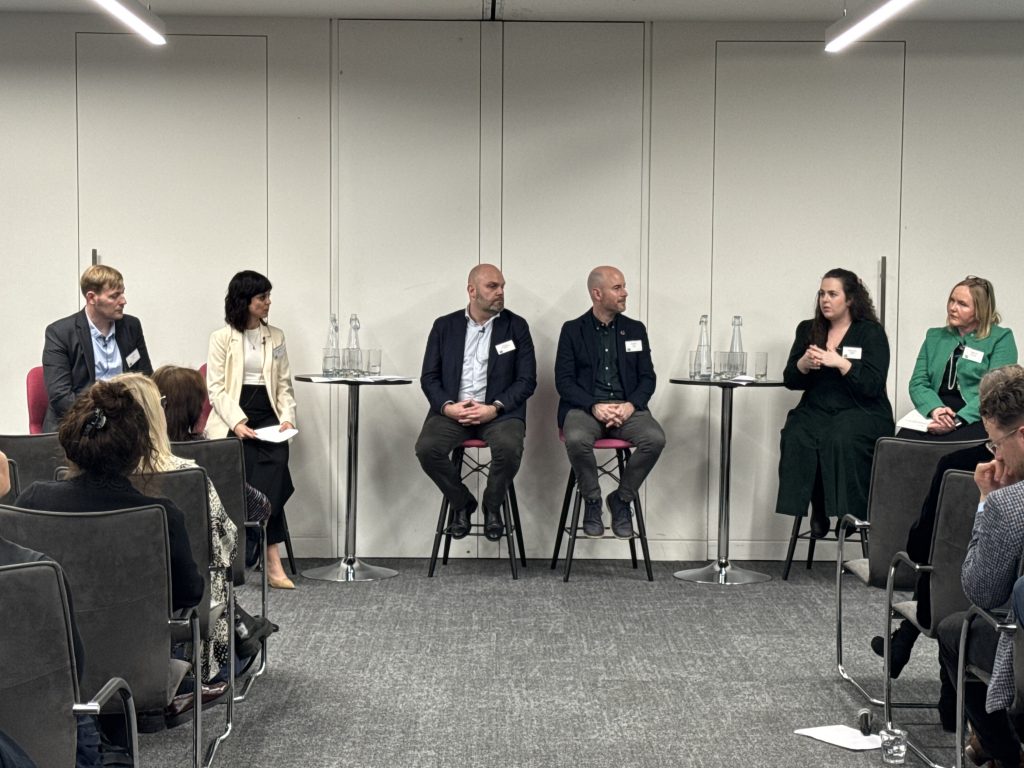
As with many of the themes explored throughout the day, progress will depend on collaboration across suppliers, CDMOs, license holders, healthcare systems, regulators, and waste-management organisations to create viable pathways for circularity. It was also noted that pharma could be looking to other industries to learn from their successes.
The discussion also highlighted the importance of clear standards and shared definitions. Without alignment on key terms such us biobased materials, recyclability, or circular materials management, organisations risk duplicating effort or pursuing initiatives that deliver limited environmental benefit.
“How can we get together as an industry? How can we learn from each of the different actors along the value chain? We need to make sure we’re not just looking at circularity from a pharma perspective, but connecting with other industries and learning from them too.”
- Andy Clarke, Bayer
Circularity is not simply a waste problem, but a design challenge that must be addressed from the very beginning of the product lifecycle. With the right standards, infrastructure and partnerships in place, pharma has the opportunity to rethink how materials flow through the healthcare system.
From momentum to meaningful change
Pharma Sustainability Integrates 2026 underlined both the urgency of the climate challenge and the momentum now building across the sector. From the shift to low-GWP inhalers to the push for harmonised Scope 3 data, pharma and healthcare are beginning to redesign the systems that sit behind how medicines are discovered, manufactured and used.
A clear theme ran through every session: collaboration is the catalyst. When manufacturers, CDMOs, suppliers, regulators and the NHS work in step, change happens faster and at far greater scale. The rapid transition to lower-GWP inhalers proved what collaboration in action can deliver – not over decades, but in a matter of years.
Healthcare represents 5% of global emissions, but its influence is far greater. It shapes behaviours, sets expectations and drives change across multiple sectors. With its scientific capability and public trust, pharma is uniquely placed to move the needle, not only within its own footprint, but as a catalyst for broader system transformation.
The next step is to deepen these partnerships, scale what already works and continue turning momentum into measurable impact. Pharma Sustainability Integrates 2026 showed that the sector can lead, and increasingly, that it is.